Human Goodness on Display During the Nationwide Aviation Mess and a Take-Away for Educators
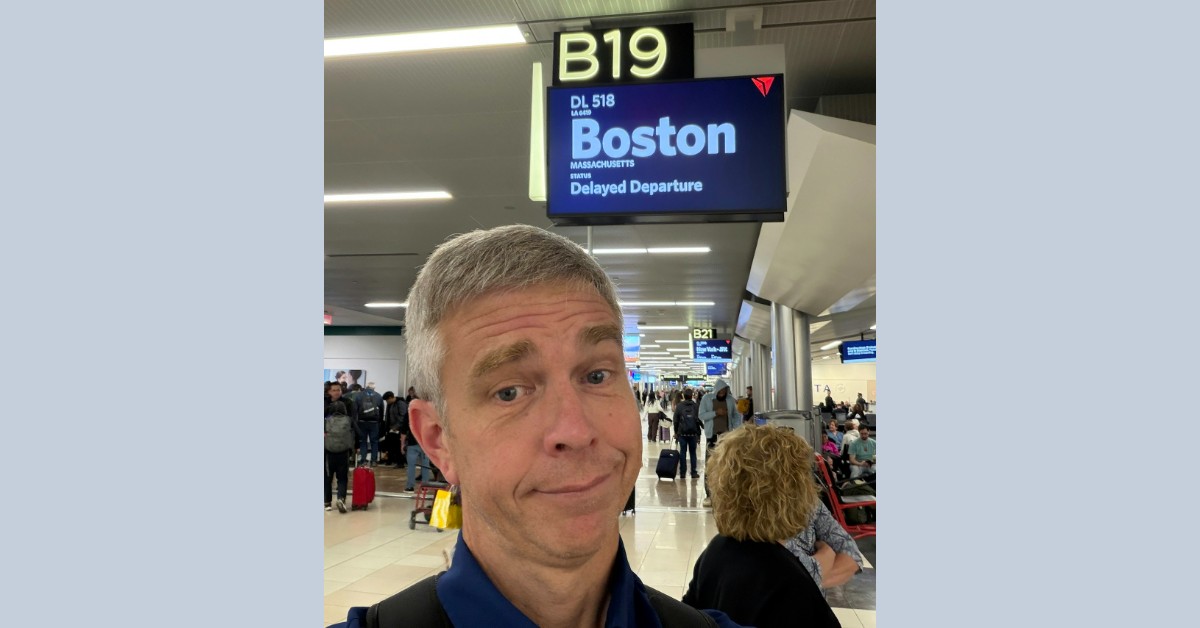
My plane was getting ready to board when the announcement came: “Due to a nationwide ground stop, all flights are currently on hold. We will let you know when we have any updates.”
I was in Austin, TX, having just presented at the Learning & the Brain conference and was eager to get home to New Hampshire for the weekend before heading to Los Angeles three days later to work with a couple of schools.
Over the course of the next 34 hours, I had multiple flights delayed and cancelled, missed connections, had many (many!) gate changes and new bookings through different airports/states. I finally landed in Portland, ME instead of Boston (where my car was). You don’t need to hear the blow-by-blow details, but it was exhausting. As I write this, I’m now on a bus back to Logan Airport and my next flight is already delayed.
An Opportunity for Dysregulation
If you had heard that something like this was going to happen, and you were to predict how people would react and behave, what images would your mind conjure? Would you imagine people throwing up their hands and huffing? How about people screaming at gate agents? Would you picture people jostling in lines at help desks, trying to elbow their way past other weary travelers? These kinds of things may have happened somewhere. But that’s not what I saw.
Sure, there were frustrations. I saw a few people in tears. There was lots of fatigue—people sleeping on floors and airport chairs. But overall, people were incredibly patient, civil, and good-natured.
In fact, there were many moments where humans displayed incredible goodness.
Human Goodness on Display
Here are several examples of human goodness I saw on display over the course of a day and a half:
A passenger brought a tired gate agent a bottle of iced tea.
Someone held the elevator door for someone else sprinting to get to a ground transportation pick-up area.
Several times, passengers helped take care of people in wheelchairs when their gates changed, making sure these passengers didn’t miss flights and knew they were cared for.
At a hotel, someone shared (and refused payment for) an Uber with a stranger when their Uber was delayed.
Passengers cheered and applauded when flight crews arrived at gates.
A young woman traveling alone (and for the first time?) was distraught and sobbing, exhausted and overwhelmed. A young man sat with her and listened. Her crying slowed and she calmed, comforted by his presence and kindness.
People helped each other navigate airline apps, showing how to look up where they were on standby lists and offering advice about how to get help more quickly than standing in long lines at help desks.
Passengers on a plane waited to deboard, letting others with tight connections deplane ahead of them.
Strangers chatted and laughed together, finding connection and community during a very challenging experience.
Two Factors that Helped
The atmosphere in the airports (at least where I was) was so calm and respectful, that people noticed. I had several conversations with fellow passengers about how relaxed and reasonable everyone was being. So, how did this happen? I have a hunch about two factors that were at play, and one offers a good reminder for us as educators.
Factor #1: A Shared Experience
The fact that this was a nationwide ground stop was important. Everyone (passengers, flight crews, gate agents, etc.) was in this together. And it wasn’t just that everyone in the airport was in the same boat. Many of us were also following the news coverage, so we saw the same thing playing out in real time everywhere. There’s comfort in community, and this may have helped everyone stay calm.
Factor #2: Modeling and Friendly Reminders
I was flying with Delta and was impressed with how Delta staff handled the whole situation. They seemed to especially do two things well, and both serve as a good reminder for educators.
They were frustrated and tired, just like the rest of us, but they radiated calm and respect. Gate agents and pilots shared information as they could. They maintained a sense of humor and playfulness. At one point, a gate agent in Atlanta was working the crowd, trying to keep things lively: “Are you ready to go to Boston?! C’mon–I can’t hear you!” People responded with weary cheers. (Thanks, Lincoln!)
A former colleague and mentor of mine, Chip Wood, used to remind teachers that we’re always modeling, whether we mean to or not. We set the tone for our students. Delta staff set a positive tone for us passengers.
But Delta staff weren’t just modeling through their behavior, they were actively coaching and reminding us of how to behave well. Here are a few examples I saw/heard:
- While we were waiting for a flight attendant to arrive so we could board (after a 2+ hour wait), another flight attendant from the crew was chatting with folks at the gate. She said, “Please be kind to the flight attendant when they arrive. This isn’t their fault, and it might not even be the flight attendant who was originally assigned to this flight.”
- When our plane landed, a flight attendant made a request: “If you don’t have a tight connection, please let passengers who do get off the plane ahead of you so they can try to make their next flights.”
- A gate agent reminded all of us: “We’re all tired as well, and we’re doing the best we can to help you all out. Please remember to be patient with us.”
A Take-Away for Educators
The tone and mood of the whole situation could easily have gone awry if Delta staff had shown annoyance, exasperation, or disrespect. It also could have been worse if they hadn’t given reminders for all of us.
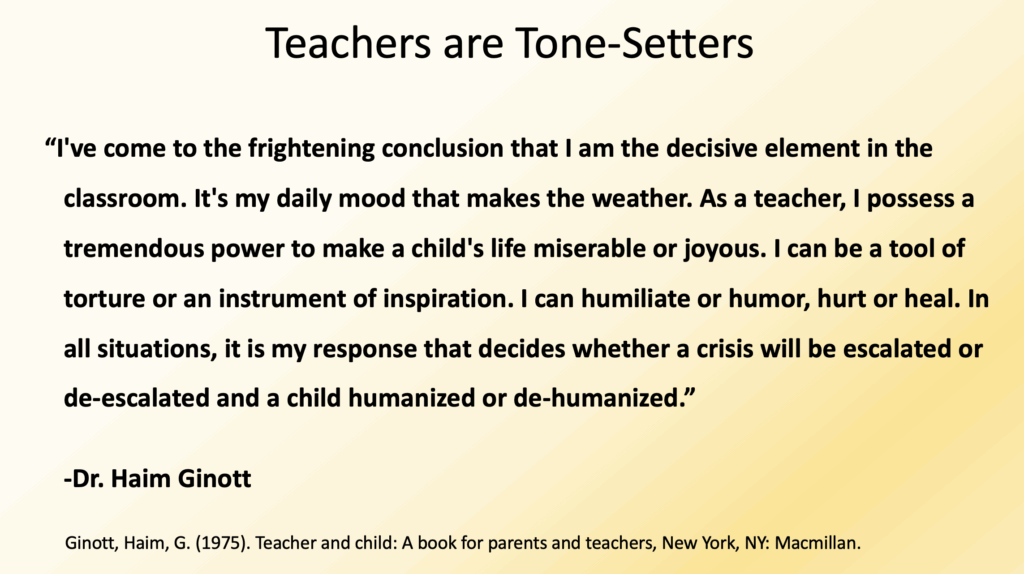
Keep this in mind the next time you have a guest speaker coming in or are heading to an assembly. Remember this when students are heading into the lunchroom or are getting ready to work on a group project. What reminders might you give to help students stay on track? What kind of energy do you want to model so that you set a tone of respect and calm? Let’s remember that as educators, we are the ultimate tone-setters for our students.
Author
-
A public school teacher for 15 years, Mike has also had many other roles in education: preschool aide, high school and age-group swim coach, camp counselor, graduate class instructor, and Responsive Classroom presenter and developer. He now works as a consultant, providing professional learning for teachers throughout the US and beyond.
As a classroom teacher, Mike was awarded a national Milken Educator Award and was a finalist for NH Teacher of the Year. In 2020, he was awarded the Outstanding Educational Leader Award by NHASCD for his work as a consultant. A best-selling author, Mike has written many books about great teaching and learning. His latest book is Hugging Porcupines: Month-by-Month Strategies to Support Our Most Challenging Students.
When not working, Mike can be found hanging with his family, tending his perennial gardens, sorting baseball cards and searching for new running routes around his home in Durham, NH.
View all posts
You may also like

Mae: The Ultimate Ted Lasso Warm Demander
- September 28, 2026
- by Mike Anderson
- in Challenging Behaviors
Famous Porcupine: Walter
Famous Porcupine: Henry