
As schools welcome more and more students back through their doors, we’re all trying to figure out the best way to do so. It seems as though there are two wildly different needs we must address. As I talk with
As educators, we all want our students to be motivated. Teachers and schools often pour immense amounts of energy into trying to motivate students, yet often it seems like the more we try, the less kids care. What’s going on?

You want at-home learning to feel purposeful and engaging for students, but you don’t want to further overwhelm yourself with work. What if there was a way to both boost student engagement and reduce the daily assigning, correcting, and keeping

Games can boost engagement and learning for students while also reducing teacher workload--a win-win!

What if there was a learning strategy that boosted student engagement, had many (many!) academic benefits for students, and reduced teacher planning and correcting/grading time? Great news! There is–and it’s a tried and true strategy you have probably been using
It might be the understatement of the summer that teachers, students, parents, and administrators are anxious about the upcoming school year.
In addition to the priorities of health, safety, and equity of access to education in this COVID-19 period, distance
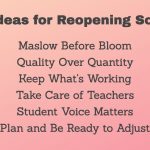
What might schools look like in the fall?
We can learn from schools that have already welcomed children back to school.
In the United States, many of us (teachers, parents, and students) are filled with anxiety about what the

I was delighted to join a group of deep thinkers for an in-depth panel discussion about leaner-centered education. Hosted by Julie Mountcastle of the Slate School, this conversation is rich and engaging. You’ll hear about the importance of cherishing children’s

A high school math teacher is recording short lessons on his phone in his basement, using a dry erase board and marker as he explains new math concepts. He posts the videos and then offers one-on-one and small group coaching

You’ve spent the whole year building a community of learners. You’ve established rules and routines to help learners manage themselves and work well with each other. Now, with schoolwork potentially moving offsite, you still want to support your students as

Is it time to try something different with your students? Is there something you’ve been trying over and over again that just isn’t working?
One year, I remember it taking me way too long to realize that I needed to
The Dilemma
You want to offer students choices about what they learn or how the learn it. Engagement would be higher and you could offer differentiated options to meet the needs of various learners. However, you’re saddled with a scripted

A teacher recently reached out to me about PBIS (Positive Behavior Intervention & Supports) and reward systems. It’s a question I’ve been hearing a lot as I work with teachers across the United States.
I am in a district
A teacher recently wrote me an email asking for some advice about student motivation. She graciously agreed to let my answer morph into a blog post.
I just finished listening to your ASCD webinar about language. I found your presentation thoughtful,

Are incentive systems used in your school? Do kids get handed tickets or fake money (to be spent at the school store) for walking quietly in hallways? Are gem and marble jars used to motivate kids to raise their hands
We want students to be more than compliant, don’t we? In addition to doing the right things, we want them to do so for the right reasons. We want students to pick up trash to keep the room clean, to be

We know about the power of relationships. We’ve heard (and believe!) the old adage, “Kids don’t care what you know until they know that you care.” So how do we build and cultivate those all-important relationships…with some of our toughest
In this lively chat with educators Allison Zmuda (personalized learning guru) and Bena Kallick (co-creator of The Habits of Mind framework), we discuss how to move beyond simply giving students choices about their learning. To really leverage the power of

If you teach reading and/or writing, there’s a good chance that when introducing a new concept or skill, you begin your lesson by saying some variation of, “Good readers….”
“Good readers pay attention to context clues.”
“Good writers add
So, let’s consider some of our common goals and explore how traditional praise may be counterproductive. Let’s also consider some alternatives—ways we can support our positive goals for students through effective language!
Some Praise Stunts Independence and

Traditional praise (such as "Good job!" and "I love the way you're..." can do more harm than good. Read on to find out what to say instead!

The way we introduce learning options to students can make or break a choice experience for students. In this blog post, you’ll learn some practical strategies and ideas from Maggie West, a fifth-grade teacher in Conway, Massachusetts. To get
“If I give my students choice, I’m worried they’re going to make bad choices,” I often hear teachers say. “They’re just going to choose the easiest option. Or, they’re going to choose what their friends choose.”
There’s no doubt that
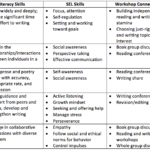
Social-emotional learning (SEL) is a hot topic in schools right now—as it should be. It’s increasingly clear that social and emotional skills are the keys to the kingdom—it’s the skill set that employers are seeking—the skill set that’s less likely to

Rick Gifford knew that a worksheet where students define words and then use them in a sentence wasn’t the most engaging way for them to learn and practice math vocabulary. He wanted to spruce things up and give his students